

Many of the people you care for can't easily tell you when something is wrong with their mouth. They might have dementia, communication difficulties, or assume that oral discomfort is something they have to live with. That's why your observations matter so much.
You don't need to be a dentist to notice that something isn't right. A red mouth sore, bad breath, or someone suddenly stopping to eat their favourite foods are all signs that something needs attention.
In our experience, most significant mouth issues begin as minor problems that often go unnoticed. For instance, an ulcer that persists for weeks, gums that bleed every time you brush, or improperly fitting dentures that no one mentions. These issues are essential, and you are the most likely person to notice them.
Your role isn't to diagnose—it's to notice and refer. You see residents and patients daily, in moments when they're relaxed and willing to let you help. That gives you an advantage that even the best dentist doesn't have.
Making Every Contact Count means using routine care as an opportunity to notice.¹ Every time you help someone with personal care, you have a chance to check their mouth and spot problems early. It takes seconds, and it can prevent pain, infection, and emergency admissions.
If you need help spotting oral health problems, then this visual guide shows you what to look for and when to act. The images and descriptions will help you recognise common problems and know what to do about them.
What to Look For

Here are the most common oral health problems you might see. Each section describes what it looks like, what it might mean, and what you should do.
Red or Swollen Gums
What you might see: Gums that look red rather than pink. Swelling around the teeth, particularly along the gum line. Bleeding when you brush (you might notice pink on the toothbrush or in the sink). Sometimes the gums feel soft or puffy rather than firm.
What it might mean: This is usually gum disease (gingivitis or periodontitis). It's caused by plaque buildup irritating the gums. It's very common, especially in people who haven't been able to brush regularly or effectively.
What to do: Improve daily brushing by brushing along the gum line. If bleeding continues after a week of good brushing, arrange a dental review. Don't stop brushing because of the bleeding (gentle brushing helps it heal).
White Patches (Thrush)
What you might see: White or cream-colored patches may appear on the tongue, inner cheeks, roof of the mouth, or gums. These patches can resemble cottage cheese. If you attempt to wipe them away, they may leave a red, sometimes bleeding surface beneath. The affected person might report that their mouth feels sore or has a bad taste.
What it might mean: This condition is commonly known as oral thrush (candidiasis), which is a fungal infection. It frequently occurs in individuals who wear dentures, take specific medications (especially antibiotics or inhalers), or have health issues that weaken their immune system.
What to do: Schedule a dental or medical review. Thrush generally requires antifungal treatment, which may include gel, drops, or tablets. While waiting for your appointment, ensure that your dentures are thoroughly cleaned and soaked overnight. Good oral care helps, but it will not eliminate thrush on its own.
Mouth Ulcers and Sores
What you might see: Small, round, or oval sores have a white, yellow, or grey centre with a red border. They typically appear on the inside of the lips, cheeks, or tongue. A person may complain that eating or talking hurts. You might notice them avoiding certain foods or frequently touching their mouth.
What it might mean: Most mouth ulcers are minor, known as aphthous ulcers, and typically heal within 1 to 2 weeks without treatment. They can be triggered by accidentally biting the cheek, experiencing stress, or consuming certain foods. However, ulcers that do not heal may indicate more serious health issues.
What to do: For typical mouth ulcers, ensure proper oral care and avoid spicy or acidic foods. If an ulcer is extremely painful, over-the-counter gels can provide relief. If it hasn't healed within two weeks, schedule a dental review.
Red flag: Any ulcer lasting more than three weeks needs urgent review.
Dry Mouth
What you might see: Lips that appear cracked or peeling may indicate dryness. A tongue that looks dry, rough, or cracked is another sign. The inside of the mouth may appear shiny instead of moist. The person might frequently request water, have difficulty swallowing dry foods like biscuits, or complain that dentures do not fit properly. Additionally, bad breath is often present.
What it might mean: Dry mouth, also known as xerostomia, is a common condition, particularly among older adults. It is often caused by medications—especially those for high blood pressure, depression, or allergies—dehydration, or breathing through the mouth.2 This condition significantly increases the risk of tooth decay, oral thrush, and general discomfort.
What to do: Encourage regular hydration with water. Consider using saliva substitutes, such as gels and sprays, available at pharmacies. Consult your GP about medications, as alternatives with fewer side effects may be available. Maintain excellent oral hygiene, since dry mouths are more susceptible to problems.
Broken or Damaged Teeth
What you might see: Teeth can display various signs of damage or decay, including:
- Visible chips, cracks, or missing pieces.
- Dark brown or black spots, which usually indicate decay.
- Teeth that appear shorter than they used to, possibly due to grinding or erosion.
- Occasionally, a tooth may be broken all the way down to the gum line.
What it might mean: Broken teeth can result from trauma, decay weakening the tooth structure, or gradual wear over time. Dark areas usually indicate cavities (decay). Both conditions require dental treatment to prevent pain, infection, and further damage.
What to do: Schedule a dental review. Broken or decayed teeth can lead to pain and infections if not treated promptly. If there are sharp edges that are injuring the tongue or cheek, this situation is more urgent. If the individual is experiencing pain, they may require an earlier appointment.
Ill-Fitting Dentures
What you might see: Dentures that shift when the person talks or eats can be problematic. You may notice visible gaps between the dentures and the gums, and there may be red, sore patches under the dentures, a condition known as denture stomatitis. As a result, the individual might frequently remove their dentures due to discomfort or may even choose to avoid wearing them altogether. You might observe that they are eating less or only consuming soft foods.
What it might mean: Dentures can become loose over time due to changes in the shape of the mouth. Ill-fitting dentures can lead to sore spots, difficulty eating, and may negatively impact speech and confidence. Additionally, they can trap food and bacteria, which increases the risk of infections and thrush.
What to do: Schedule a dental review for denture adjustment or replacement. Ensure that dentures are cleaned daily by brushing with a denture cleaner and soaking them overnight. Avoid attempting to adjust dentures yourself, as this may cause damage.
Bad Breath (Halitosis)
What you might see: This is something you smell rather than see. A persistent, unpleasant odour from the mouth that doesn't improve after brushing may be noticed by the person's family or colleagues. The individual might not even be aware of it themselves.
What it might mean: Bad breath typically signifies the presence of bacteria in the mouth, which is often caused by poor oral hygiene, gum disease, tooth decay, or dry mouth. It can also occur when food becomes trapped around poorly cleaned dentures. In some cases, bad breath may indicate other health issues, such as chest infections, stomach problems, or uncontrolled diabetes.
What to do: Enhance oral care by brushing teeth, gums, and tongue twice daily. Ensure dentures are cleaned thoroughly. Encourage drinking water if dry mouth occurs. If bad breath continues despite proper oral care, schedule a dental appointment.
Signs of Pain or Difficulty Eating
What you might see: You may notice changes in eating habits, such as avoiding certain foods, eating slowly, or leaving food uneaten. The individual may hold their hand to their cheek or jaw and grimace while eating or drinking, especially with hot or cold foods. Additionally, behavioural changes like irritability, agitation, and disturbed sleep can occur. Weight loss might also be observed. While the person may not directly say their mouth hurts, their behaviour often indicates something is wrong.
What it might mean: Mouth pain can result from various issues, including tooth decay, gum disease, ill-fitting dentures, mouth ulcers, dry mouth, tooth fractures, or dental abscesses. In individuals with dementia or communication difficulties, behavioural changes can be the first sign of oral pain.
What to do: If you suspect mouth pain, arrange for a dental review. In the meantime, offer soft foods and avoid very hot, cold, or spicy items. If pain relief is necessary, follow your setting's medication policy. Don't assume that oral pain is normal or that individuals simply have to live with it.
How to Check
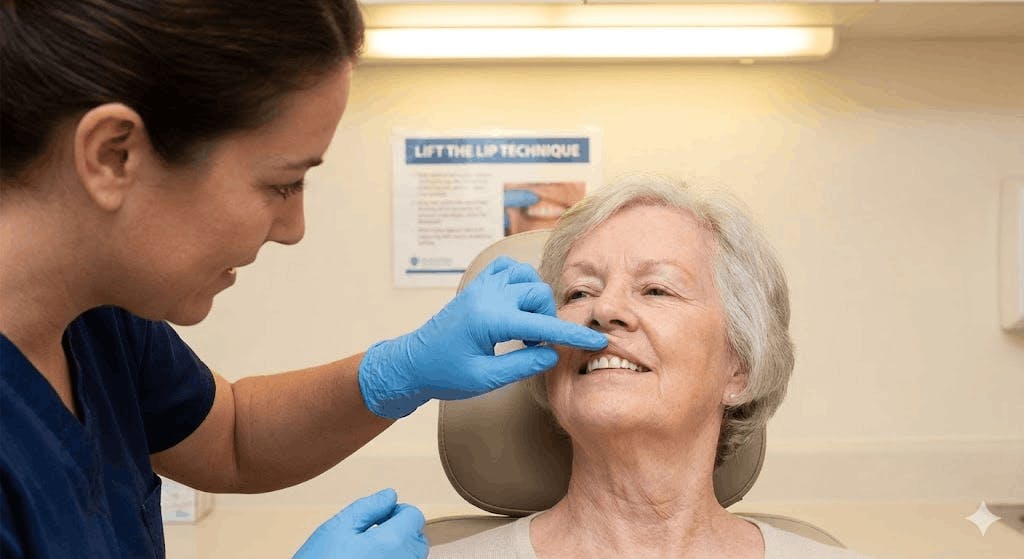
Looking in someone's mouth doesn't have to be complicated or uncomfortable. Here's how to do it safely and effectively.
The "Lift the Lip" Technique
This simple approach comes from the Mini Mouth Care Matters programme and works for all ages.³
What you need:
- Good lighting (natural light or a torch)
- Clean gloves
- A few minutes during routine care
How to do it:
1. Explain what you're doing. Even if the person has a limited understanding, talking through what you're doing helps them feel safe. Try saying something like, "I'm just going to have a quick look in your mouth to make sure everything looks healthy."
2. Position yourself appropriately. You need to be able to see clearly. For someone sitting, stand or kneel slightly to their side rather than directly in front of them. For someone in bed, raise the head of the bed if possible.
3. Gently lift the lip. Using a gloved finger, gently lift the top lip to see the front teeth and gums. Look for redness, swelling, or bleeding. Then do the same with the bottom lip.
4. Ask them to open their mouth. If they're able to cooperate, ask them to open wide and look at the tongue, inner cheeks, and roof of the mouth. Use a torch if needed.
5. Check dentures separately. If the person wears dentures, ask them to remove them (or help them do so). Look at the gums underneath for sore spots or redness. Check the dentures themselves for damage, staining, or food debris.
When to Look
Build mouth checks into your routine rather than treating them as a separate task.
Good opportunities:
- During morning personal care
- When helping with teeth brushing
- Before and after meals
- When helping with dentures
- Any time the person mentions discomfort
How often: A brief visual check during daily care is ideal. More thorough checks might happen weekly. Whatever system you use, make it consistent so nothing gets missed.
Adaptations for Different Needs
For people with dementia: Move slowly and calmly. Maintain eye contact and use a gentle tone. Try distraction techniques if they resist (singing, gentle hand-holding, showing them objects to hold).4 If they become distressed, stop and try again later. Some people accept mouth checks better at certain times of day.
For people with learning disabilities: Use simple, clear explanations. Allow extra time. Consider using visual aids or social stories to explain what's happening.5 Some people respond better to routine and consistency, so checking at the same time each day can help.
For people who resist: Resistance often has a reason. The person may be anxious, in pain, or have had past bad experiences. Try different times of day. Use gentle encouragement rather than insistence. Sometimes, allowing them to hold a mirror and look at themselves reduces anxiety. If resistance continues, document it and seek advice from dental professionals about adapted approaches.
What to Document

When you notice something, write it down. Good documentation helps dental professionals understand what's happening and how long it's been going on.
Record:
- What you saw (describe it simply)
- Where in the mouth
- When you first noticed it
- Any changes from previous checks
- Any related symptoms (pain, difficulty eating, behaviour changes)
- What action was taken
When to Get Help

Not every dental concern requires immediate action. Here’s a guide to help you determine the appropriate next steps:
Routine Dental Review (Schedule within Normal Waiting Times)
- Gums that bleed with brushing
- Gradual build-up of plaque or tartar
- Loose dentures
- Minor chips to teeth (without pain)
- Routine check-up due
Prompt Dental Review (Within 1-2 Weeks)
- Persistent bleeding gums despite good brushing
- White patches in the mouth
- Sore areas under dentures that aren't healing
- Bad breath that doesn't improve with good mouth care
- Broken tooth (without severe pain)
- Suspected dry mouth affecting comfort
Make sure to monitor your symptoms and seek help when needed!
Urgent Dental Review (Within 24-48 Hours)
- Severe tooth pain that is not relieved by standard painkillers
- Facial swelling
- An ulcer that has not healed after three weeks
- Signs of infection, such as swelling, fever, and general malaise
- Abscess (painful swelling, which may contain visible pus)
- Persistent bleeding that won't stop
- A broken tooth with sharp edges that may cause injury
Accessing Dental Services
For care home residents: Speak to your manager about established dental service links. Many areas have special dental services for care homes.6 If a resident doesn't have a regular dentist, NHS England can help find one.
General guidance: If you're unsure whether something needs urgent attention, it's always better to seek advice. Contact your setting's usual dental service, NHS 111, or (for genuine emergencies) 999.
Quick Reference: What to Look For
Healthy mouth signs:
- Pink, firm gums
- Clean teeth or dentures
- Moist tongue and mouth lining
- No persistent bad breath
- Comfortable eating and drinking
Warning signs:
- Red, swollen, or bleeding gums
- White patches
- Ulcers or sores
- Dry, cracked mouth
- Broken or decayed teeth
- Ill-fitting dentures
- Persistent bad breath
- Signs of pain or eating difficulty


