

If you work in care, you're likely aware that providing good care goes beyond meeting basic needs. It's about ensuring comfort, preserving dignity, and helping individuals feel like themselves. One aspect that often gets overlooked is oral health, which is central to achieving this.
When someone's mouth is sore, dry, or infected, everyday activities become challenging. Eating can be painful, speaking may feel uncomfortable, and even smiling can hurt. For older adults and those with additional needs, poor oral health extends beyond dental issues. It can lead to serious complications such as chest infections, malnutrition, diabetes complications, and a significant decline in quality of life.
This is where you come in.
As someone who interacts with residents or patients daily, you are in a unique position to ensure that mouth care is consistently and effectively provided. You notice details that others might miss, and you are present during the moments that matter the most. With the proper support, you can drive meaningful change in your care setting.
Our experience shows that facilities with a dedicated Mouth Care Champion see significant improvements. Residents become more comfortable, staff members gain confidence, and the overall quality of care increases in ways that truly benefit those you are looking after.
The CQC's Smiling Matters report revealed that only 28% of care homes have someone dedicated to leading oral health initiatives.¹ This represents a significant gap and an opportunity for you to make a positive impact.
Becoming a champion for oral health doesn’t require you to be an expert in dentistry. It simply means being the person who ensures that mouth care is not overlooked. It involves supporting your colleagues, identifying problems early, and ensuring that everyone receives the care they deserve.
What Does a Mouth Care Champion Do?

A Mouth Care Champion is the local leader for oral health in their community. You don't need to be a dental professional; you just need to care about doing the right thing and be willing to help others do the same.
Your Role in Practice
- Supporting daily routines. You ensure that mouth care is provided twice daily to all who need it. This involves checking supplies, reminding colleagues, and integrating mouth care into care plans and daily routines.
- Building colleague confidence. Many care staff may feel unsure about how to perform mouth care. They might worry about making mistakes or causing discomfort. Your role is to reassure them, share effective techniques, and help them build their confidence.
- Spotting problems early. You encourage staff to regularly inspect residents' mouths and report any issues they notice. Early detection of problems can lead to less pain for residents and better overall outcomes.
- Liaising with dental services. You serve as the connection between your facility and local dental services. You are knowledgeable about whom to contact when a resident needs dental care, and you follow up to ensure that appointments are scheduled and kept.
- Keeping records. You help to ensure that mouth care is accurately documented in care plans and daily records. Good documentation safeguards residents, supports your colleagues, and demonstrates to inspectors that you are meeting necessary standards.
Making Every Contact Count
Every time you or your colleagues interact with a resident, you have an opportunity to support their oral health.² It doesn't have to take long, but it DOES need to happen.
It doesn't have to be complicated. Simple actions, like noticing if someone's mouth looks dry, checking whether their dentures are clean, or asking if they are experiencing any pain in their mouth, can make a significant difference. These small moments contribute to better care.
You encounter residents in situations that dental professionals may never see. This is your advantage.
How to Get Started
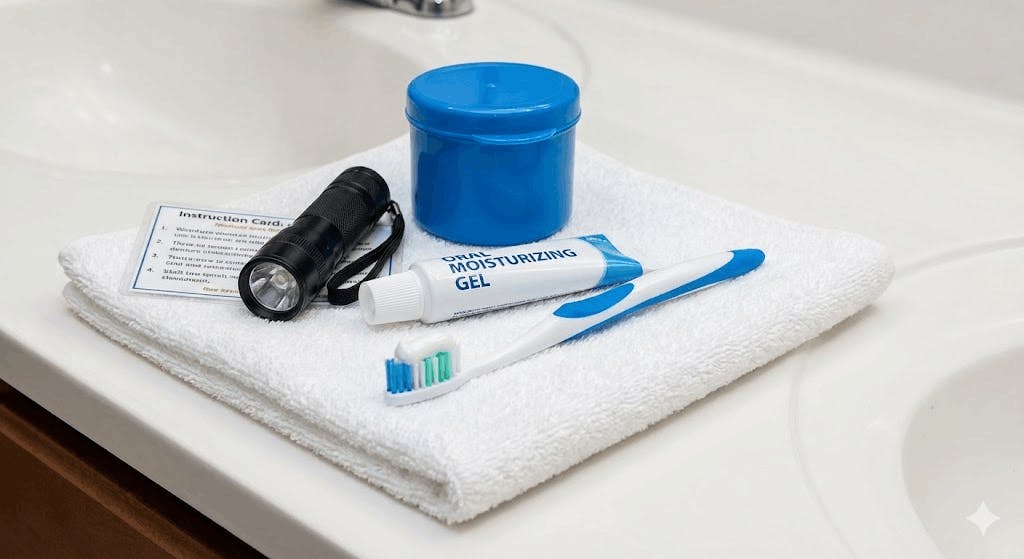
Becoming a Mouth Care Champion is straightforward. Here's how to begin.
Step 1: Complete the Training
The Mouth Care Matters programme, offered by Health Education England, is the ideal starting point.³ It is free, takes approximately six hours to complete, and allows you to learn at your own pace.
The programme covers the following topics:
- The connection between oral health and general health
- Effective tooth brushing techniques
- Proper care for dentures
- Management of dry mouth
- Strategies for supporting individuals who resist mouth care
- Mouth care considerations at the end of life
Upon completion, you will receive a CPD-accredited certificate, which serves as proof of your training for your employer and can be presented during CQC inspections.
How to Access the Training
If you work for the NHS, you can access the training through your Electronic Staff Record (ESR). For social care staff, your employer can arrange access via the e-Learning for Healthcare platform. If you encounter any difficulties accessing the training, please speak to your manager or contact your local training team.
Step 2: Talk to Your Manager
After completing the training, talk to your manager about taking on the champion role. Most managers are supportive, especially if you explain how this role relates to CQC expectations and quality improvements.
Share what you have learned and outline the responsibilities of the role. It doesn't require a lot of extra time; it's primarily about keeping mouth care a priority and providing support to colleagues when they need it.
Step 3: Assess Your Setting
Utilise a self-assessment tool to identify gaps in your current practices. The Lancashire Baseline Assessment Tool is particularly effective.⁴ It asks straightforward questions such as:
- Do you have an oral health policy?
- Are assessments conducted upon admission?
- Do care plans include mouth care?
- Is daily mouth care recorded?
- Have staff received training?
- Is there access to dental services?
This tool provides a clear overview of where you should direct your efforts.
Step 4: Build Mouth Care into Routines
The key to maintaining consistent mouth care is to integrate it into existing routines rather than treating it as an additional task.8 Collaborate with your team to incorporate mouth care into the following:
- Morning personal care (brushing after breakfast)
- Evening personal care (brushing before bed)
- Denture care (cleaning and overnight soaking)
Ensure that dental supplies are easily accessible. Verify that everyone knows where toothbrushes, toothpaste, denture brushes, and cleaning tablets are stored. If supplies run out, mouth care will cease, and that's a simple fact.
Step 5: Support Your Colleagues
Some staff members will feel confident right away, while others may need encouragement. Common concerns include:
"I don't know how to help someone who resists." Module 5 of Mouth Care Matters addresses this in detail. The key is to understand why someone might resist, such as pain, confusion, or fear, and to adapt your approach accordingly. Gentle persistence is usually more effective than force.
"I'm worried about hurting them." A soft toothbrush used gently will not cause harm. In our experience, residents often find brushing soothing once they become accustomed to it again. If someone has very sensitive gums, extra-soft brushes are available.
"There isn't time." Brushing takes only two minutes. Incorporating it into personal care routines means it won’t add extra time; it will simply become part of your routine.
Troubleshooting Common Barriers
The UCL TOPIC study examined what factors determine whether mouth care implementation succeeds or fails in care homes.⁵ The barriers they found won't surprise you:
- Time pressure: Address this by integrating mouth care into existing routines
- Staff turnover: Keep training simple and repeat key messages regularly
- Lack of leadership support: Share the evidence with managers and link to CQC expectations
- Forgetting: Use checklists and visual reminders
The settings that succeeded had one thing in common: someone who kept mouth care on the agenda. That someone can be you.
[VISUAL: Training pathway. Simple flowchart showing steps from interest to trained champion. Shows: Interest → Training → Manager approval → Implementation → Ongoing support.]
The Difference You Can Make
When mouth care is done well, the results are visible.
Residents eat more comfortably. They smile more readily. They sleep better without the disturbance of oral pain. Staff feel more confident in their practice. And when CQC visits, you can demonstrate that you're meeting people's oral health needs.
The CQC's 2023 progress report found significant improvements in care homes that had prioritised oral health.⁶ Fewer emergency dental admissions. Better nutrition. Increased dignity and comfort. These aren't small things.
As a champion, you'll be part of that change.
Many champions find the role rewarding in ways they didn't expect. You become the person colleagues come to with questions. You see improvements in residents that you helped make possible. And you'll know that you're doing something that matters.
And you'll know that you're doing something that matters.
Quick Reference: Getting Started Checklist
Training
- [ ] Complete Mouth Care Matters e-learning (6 modules)
- [ ] Download your CPD certificate
- [ ] Share certificate with manager/HR
Manager Conversation
- [ ] Explain the champion role
- [ ] Discuss how it fits with your current responsibilities
- [ ] Agree on how to communicate the role to colleagues
Setting Assessment
- [ ] Complete baseline assessment checklist
- [ ] Identify gaps in current practice
- [ ] Prioritise areas for improvement
Implementation
- [ ] Check mouth care supplies are stocked and accessible
- [ ] Ensure mouth care is included in care plan templates
- [ ] Set up a daily recording system
- [ ] Brief colleagues on expectations
Ongoing
- [ ] Regular supply checks
- [ ] Support colleagues with questions
- [ ] Link with dental services for access issues
- [ ] Review and update care plans
When to Get Help
As a champion, you'll develop confidence in supporting daily mouth care. But some situations need a professional dental assessment.7 It's important to know when to refer.
Contact dental services when:
- A resident needs a routine dental check-up
- Dentures are broken, lost, or no longer fit properly
- There are signs of tooth decay or gum disease
- A resident has persistent mouth pain
Seek urgent dental advice when:
- There is facial swelling
- A resident has severe pain not controlled by usual pain relief
- There is bleeding that won't stop
- You suspect an abscess (swelling with fever)
Raise concerns with your manager when:
- You're unable to access dental services for residents
- You need additional training or support
- There are barriers to implementing mouth care routines
- You identify patterns of oral health problems across your setting
You're not expected to manage dental problems on your own. Your role is to ensure daily care happens and to connect people with professional help when they need it.


