

You're assisting someone in rebuilding their life in a new country, and you're already juggling tasks like housing forms, school registrations, benefit applications, and immigration appointments. Now, you've realised they need dental care, and navigating the NHS dental system feels like yet another challenge.
Many refugees and asylum seekers arrive with significant unmet dental needs. Research indicates that more than a quarter experience dental pain, and more than a third have not seen a dentist in years.¹ A persistent toothache can severely impact how individuals eat, sleep, speak, and feel about themselves, further complicating their already difficult circumstances.
If you're unsure how the NHS dental system works, how to find a dentist accepting NHS patients, or what your clients are entitled to, this guide will help you.
Why Dental Access Matters

Oral health impacts more than just our teeth. It influences how we eat, sleep, communicate, and feel about ourselves. For those rebuilding their lives in a new country, ongoing toothaches or visible dental issues can complicate an already challenging situation.
Many refugees and asylum seekers arrive in the UK with significant dental needs. Research indicates that over a quarter experience dental pain, and more than a third have not seen a dentist in years.¹ This is not surprising, as dental care is often either unavailable or unaffordable in countries facing conflict or instability.
The positive aspect is that most refugees and asylum seekers are entitled to free NHS dental treatment in the UK². The challenge lies in navigating the healthcare system.
As a support worker, you play a crucial role in helping individuals bridge this gap. You don’t need dental expertise. You simply need to understand how the system works and how to help someone access the care they need.
Understanding the System
How NHS Dental Care Works
NHS dental care operates differently from GP care. Instead of registering permanently with a dentist as you do with a GP, you become a patient of a dental practice when you book and attend an appointment.
Anyone can use NHS dental services. You do not need proof of address or identification documents to access NHS dental care.³
Who Gets Free Treatment
Most refugees and asylum seekers qualify for free NHS dental treatment.2 Here's how it works:
- Asylum seekers receiving asylum support (Section 95 or Section 4) are entitled to free NHS dental care through the HC2 certificate.² This certificate covers all NHS charges, including prescriptions and dental treatment.
- Refugees who have been granted leave to remain in the UK have the same NHS entitlements as any UK resident. If they are on a low income or receiving certain benefits, they may also qualify for an HC2 certificate.
- Children under 18 always receive free NHS dental treatment, regardless of their immigration status.
- Pregnant women and new mothers (up to 12 months after the baby's birth) always receive free NHS dental treatment.
The HC2 Certificate
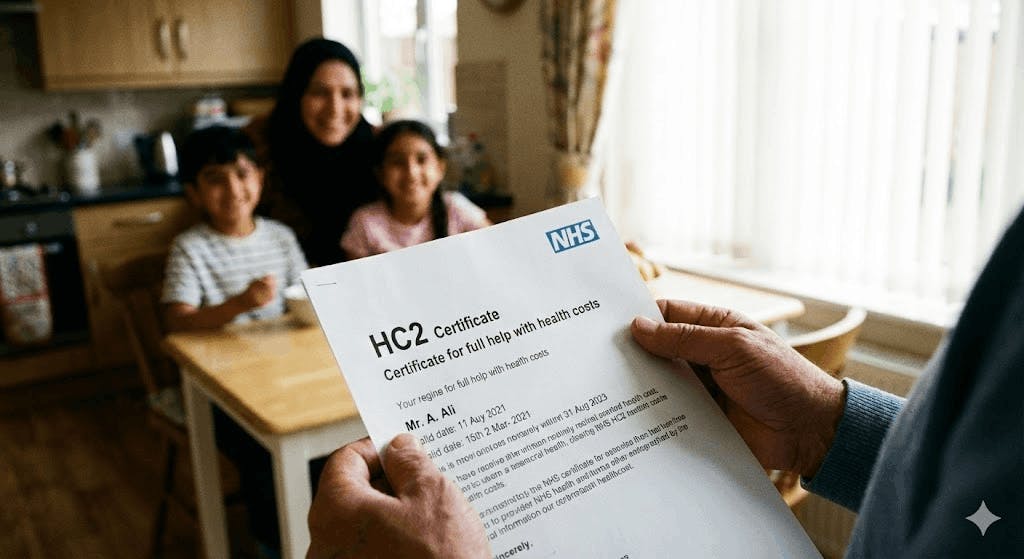
The HC2 certificate is a card that demonstrates an individual is entitled to free NHS treatment.² It covers the costs of dental charges, prescriptions, sight tests, and travel expenses for NHS treatment.
To apply for the HC2 certificate, the person you support needs to complete an HC1 form.² These forms are available at Jobcentres, NHS hospitals, and online. The processing time typically takes around two weeks.²
If someone requires urgent dental care before receiving the HC2 certificate, they can still see a dentist. The dentist can provide the necessary treatment, and the individual can claim back the costs once the certificate is received.
Practical Steps to Access Care
Finding a Dentist
To find an NHS dentist, follow these steps⁵:
- Start by visiting the NHS website at nhs.uk. Search for "find a dentist."
- Enter the postcode of the person seeking a dentist. This will display nearby dental practices and indicate whether they are accepting new NHS patients.
- Call the dental practices directly. When you call, say: "I'm helping someone find an NHS dentist. Are you currently accepting new NHS patients?"
- If a practice informs you that they are not accepting NHS patients, continue trying other practices, as availability can change.
- Alternatively, you can contact NHS England for assistance in locating a practice in your area.
By following these steps, you can help someone find the dental care they need.
What to Say When Booking
When booking an appointment, you may need to explain the situation. Here’s how to do it:
"This person is new to the UK and has not seen a dentist here before. They would like to register as an NHS patient and have an HC2 certificate (or are applying for one)."
If you are asked for ID or proof of address, explain that NHS dental care does not require these documents.
If the person does not speak English confidently, request an interpreter. If the practice cannot provide one, ask what interpretation options are available locally and arrange support if needed³. Be sure to request this when booking the appointment so the practice can make the necessary arrangements.
Preparing for the Appointment
Help the person understand what to expect. A first dental appointment usually involves:
- The dentist is looking at their teeth and gums
- Questions about any pain or problems
- X-rays if needed
- A treatment plan explaining any work needed
- Discussion of costs (free with HC2)
Reassure them that nothing will happen without their agreement. The dentist will explain their plan and obtain consent.
They can bring someone with them for support. This could be you, a friend, or a family member.
If they feel anxious about dental care, they can inform the dentist. Many people feel nervous, and dental teams are experienced in helping anxious patients.
On the Day
Please arrive 10 to 15 minutes early for your first appointment to complete the forms.
If you have an HC2 certificate, please bring it along. If you are still waiting, please provide proof that your application has been submitted.
Also, bring any medications you are currently taking, or a list of their names.
If you require an interpreter, the practice should have arranged this in advance. Please check upon your arrival.
Overcoming Common Barriers
Language
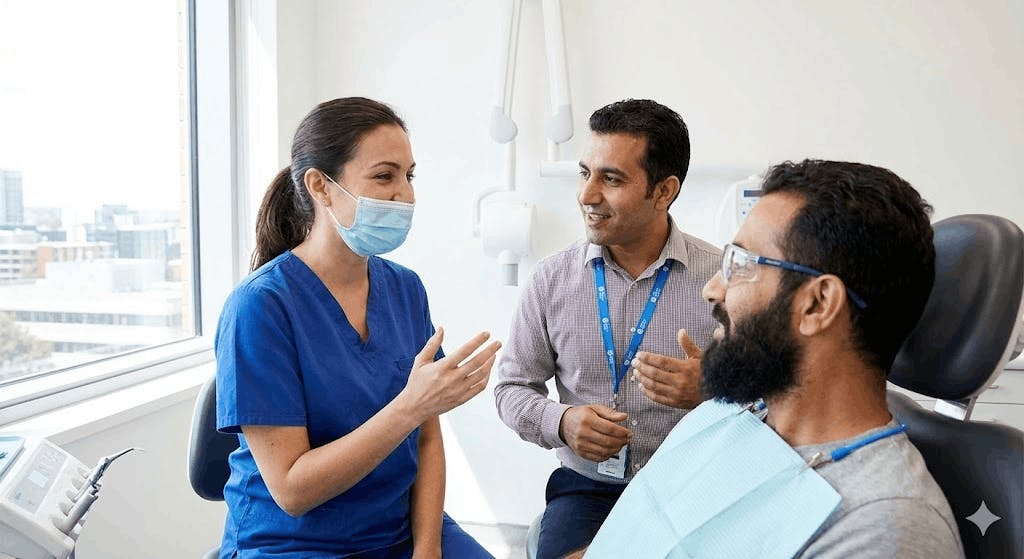
Professional interpretation is crucial for health appointments. Family members, especially children, should not act as interpreters during medical or dental consultations.
When scheduling an appointment, request that the practice arrange an interpreter and specify the required language. If the practice is unable to provide one, reach out to your local interpretation service and bring an interpreter with you.
During the appointment, speak directly to the person receiving care rather than to the interpreter. Use simple, clear sentences and pause regularly to allow for proper interpretation.
Fear and Anxiety
Many people have had challenging experiences with dental care or no experience at all. It's natural to feel fear in such situations.
It's important to acknowledge these feelings. UK dentists are trained to work with anxious patients and will ensure they explain everything before proceeding with any treatment and obtain your consent.
Some individuals find it helpful to visit the practice beforehand to familiarise themselves with the environment. Others may prefer to get their first appointment over with quickly. It's essential to ask what would help you feel more comfortable.
Competing Priorities
When someone is dealing with issues like housing, immigration, financial concerns, and settling children into school, dental care can often seem like a low priority. However, it’s important to view dental care as integral to overall well-being. A toothache can make everything more difficult, and resolving dental problems means one less worry.
If possible, link dental appointments to other activities. For instance, if there’s a GP appointment or a meeting about benefits nearby, schedule the dentist visit for the same trip.
Transport
If transport is a barrier, check whether the person is eligible for assistance with travel costs. The HC2 certificate covers travel to NHS appointments for those on low incomes.
Some areas have community transport schemes or volunteer driver services. Local refugee support organisations may be able to help.
Urgent Dental Problems
Not all dental problems need urgent care. But some do.
Contact NHS 111 if:
- Severe toothache not controlled by painkillers
- Swelling in the mouth or face
- Bleeding that won't stop
- A knocked-out adult tooth (this is an emergency)
- Broken or chipped teeth causing pain
NHS 111 is available 24 hours a day, 7 days a week. Interpreters are available. They can direct the person to an urgent dental service.
Go to A&E if:
- Swelling is affecting breathing or swallowing
- There's heavy bleeding that won't stop
- There has been a serious injury to the face or jaw
A&E is for emergencies only. Most dental problems, even painful ones, should go through NHS 111 or a dental practice.
Making It Work Long Term
The goal is not just to schedule one dental visit, but to help someone incorporate regular dental care into their life in the UK.
After their first appointment, encourage them to book their next check-up. The dentist will typically recommend how often to return, typically every 6 to 12 months.
If treatment is necessary, ensure they understand the plan. Clarify how many appointments will be required and what will happen at each one. Writing this information down can be helpful.
Some individuals may need assistance remembering their appointments. A text reminder, a diary note, or a follow-up call from you can make the difference between attending and missing an appointment.
Celebrate small victories along the way. Attending the first appointment is an achievement. Completing treatment is an accomplishment. Building a relationship with a dental practice is also a significant success.
Quick Reference
Key facts:
- NHS dental care is available, and many refugees and asylum seekers are entitled to free NHS dental treatment depending on their circumstances⁴
- No proof of address or ID is required to access NHS dental care
- Asylum seekers with an HC2 certificate receive free treatment
- Refugees with leave to remain have standard NHS entitlements
- Children under 18 always receive free NHS dental treatment
- Pregnant women and new mothers receive free NHS dental treatment
To find a dentist:
- Go to nhs.uk and search "find a dentist"
- Call practices directly to ask about NHS availability
- Contact NHS England if you're unable to find a practice
To book an appointment:
- Request an interpreter if needed
- Explain that the person is new to NHS dental services
- Bring the HC2 certificate if available
For urgent problems:
- Call NHS 111 for advice and directions to urgent dental care
- Go to A&E only for emergencies affecting breathing, causing heavy bleeding, or involving serious injury
When to Get Help
Contact a dental professional urgently if the person you support has:
- Severe facial swelling
- Difficulty swallowing or breathing due to mouth or throat swelling
- Heavy bleeding from the mouth that won't stop
- Signs of infection with fever
Encourage a routine dental appointment if you notice:
- Visible holes or dark spots on teeth
- Red, swollen, or bleeding gums
- Complaints of toothache or sensitivity
- Difficulty eating due to dental pain
- Bad breath that persists
- Loose teeth
If a child in your care shows signs of dental problems, act promptly. Untreated dental decay can affect eating, sleeping, concentration at school, and overall development.


