

Traveller families face specific barriers when seeking dental care. Their mobile lifestyles, experiences of discrimination, and administrative obstacles contribute to their exclusion from NHS services.
When a Traveller family asks for assistance in registering with a dentist, you might feel frustrated by consistently having to reassure the receptionist that families can reside on a site.
Do not be discouraged.
The fact is, receptionists are misinformed.
There is no requirement for proof of address to register with an NHS dentist.² However, when families repeatedly encounter this incorrect response, it creates a significant barrier to access. Mobile communities struggle to access dental care because reception staff are unfamiliar with the relevant policies.
If you are unsure how to navigate the registration process without proof of address, what to say when practices refuse service, or how to support families who have been turned away in the past, this guide is for you.
Why Access Matters
Oral health impacts many aspects of life, including eating, sleeping, speaking, smiling, and overall confidence. For children, untreated dental issues can lead to pain, hinder learning, and affect their development. For adults, poor oral health can negatively influence work, relationships, and quality of life.
Gypsy, Roma, and Traveller (GRT) communities face significant oral health inequalities. Research consistently shows that they experience higher rates of dental decay and lower rates of dental visits compared to the general population.¹
These disparities are not related to culture or lifestyle choices; instead, they stem from barriers to access. When families frequently move, maintaining contact with health services becomes challenging. Additionally, when services are designed for settled populations, mobile communities often get overlooked.
Your role is to help bridge this gap by understanding the policies and knowing practical solutions. This knowledge will empower you to help GRT families effectively access the dental care they need.
Understanding the Barriers

The Registration Myth
Many people believe you need a fixed address to register with a dentist. This isn't true.
You don't need proof of address to register with an NHS dentist. Dental practices cannot refuse to register a patient simply because they lack a permanent address or cannot provide utility bills.²
Families living on a site can use the site address. If they are homeless or do not have a fixed location, they can still register. Some families may use the address of a liaison officer or a trusted organisation, with permission.
The problem is that many dental practices are unaware of this. Reception staff may request proof of address as a common practice, but it's not a policy. If a practice refuses registration based on address, it is incorrect.²
Continuity Challenges
When families move between areas, maintaining dental care can be challenging.
A family registered with a dentist in one location cannot easily transfer that registration when they move. They may need to find a new dentist in each new area, leaving treatments started before the move incomplete. Additionally, dental records do not automatically follow families.
This disruption in care can significantly impact children, making regular check-ups challenging and leading to missed opportunities to catch potential dental issues early.
Previous Negative Experiences
Many Gypsy, Roma, and Traveller (GRT) families have encountered negative experiences with health services. They may have been turned away, treated rudely, or made to feel unwelcome, which can make families hesitant to seek care again.
When a family states, "dentists don't want us" or "they'll just turn us away," they are often speaking from personal experience. It is not helpful to dismiss these concerns; it is essential to acknowledge them and offer practical support.
Other Barriers
- Literacy and paperwork. Registration forms and appointment letters often assume a certain level of literacy, which can create obstacles for families with lower literacy skills.
- Competing priorities. Families dealing with housing insecurity, legal issues, or financial pressures often prioritise those concerns over dental care, which is a rational choice rather than an irresponsible one.
- Fear and anxiety. Dental anxiety is common across all communities, but for families who have had negative experiences with services, this anxiety can be heightened.
- Transport and timing. Appointments scheduled during working hours can be challenging, and getting to practices in unfamiliar areas adds another layer of complexity.
Practical Solutions

Helping Families Find a Dentist
The NHS website has a "Find a Dentist" tool that shows practices taking NHS patients in any area. Go to www.nhs.uk/service-search/find-a-dentist and search by postcode or town.
Not all listed practices will be accepting new patients, so it's important to call ahead to avoid wasted trips. If you are assisting a family, consider making the call with them or on their behalf.
When calling a dental practice, you might say: "I'm calling to ask if you're accepting new NHS patients. The family I'm supporting lives in [site name] and would like to register. They don't have utility bills, but I understand that's not a requirement for NHS dental registration."
If a practice requests proof of address, politely explain that this is not an NHS requirement. If they continue to refuse, try another practice, as some may be more accommodating than others.
Using Alternative Addresses
If a family does not have a fixed address, consider these options for registration:
- Site address. If the family lives on a local authority or private site, the site address can be used for registration.
- Liaison officer or support organisation. With permission, families may use the address of a Traveller liaison officer or a support organisation they are working with.
- Care of address. Some practices accept a "care of" address at a trusted organisation.
The key is that the practice can contact the family if necessary. Work with the family to find a suitable solution.
Preparing for the Appointment
Help the family understand what to expect during their first dental appointment, which typically includes:
- Completing a registration form (offer to help with this)
- A check-up where the dentist examines teeth and gums
- A discussion of any problems or concerns
- A treatment plan, if necessary.
Children under 18 receive free NHS dental treatment, while adults may need to pay NHS charges unless they qualify for free treatment under benefits or on a low income.
If the family is anxious about the appointment, acknowledge their feelings. Many people find dental visits stressful, but the dental team is accustomed to working with nervous patients and will do their best to help.
When Families Move
When a family is planning to move, suggest they:
- Complete any urgent dental treatments before leaving, if possible.
- Request a treatment summary or a copy of their dental records from the dentist.
- Keep a note of which treatments have been completed and which are planned.
This information helps the next dentist understand the family's situation without having to start from scratch.
There is no formal system for transferring dental records between practices; families should manage this process themselves. Keeping a simple written record can be beneficial.
Outreach Services
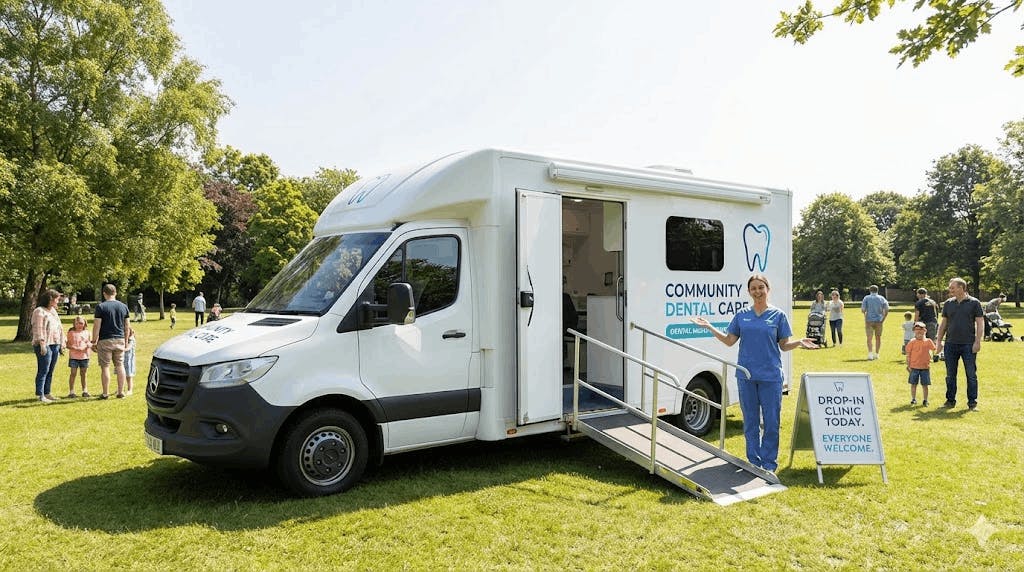
Some areas offer outreach dental services that visit sites or community locations, specifically designed to support communities that face barriers to accessing mainstream care.³
Contact your local community dental service or oral health promotion team to find out what services are available in your area. Organisations like Dentaid also provide outreach services in certain regions.
If outreach services operate in your area, assist families in knowing when and where these services will be available. A trusted professional encouraging attendance can make a significant difference.
School Dental Programmes
Many areas implement dental programs in schools that may include screenings, fluoride varnish applications, and supervised toothbrushing.⁴ These programs are particularly beneficial for children from Gypsy, Roma, and Traveller (GRT) communities, as they provide dental care without requiring families to navigate the system.
If Traveller children are enrolled in school, check whether the school participates in dental programs. Ensure families are aware of these opportunities and have provided consent.
For children who are homeschooled or have irregular school attendance, inquire with your local oral health team about possible alternative arrangements.
Working with Site Managers and Liaison Officers
If you work with families on local authority sites, the site manager or Traveller liaison officer can be instrumental in accessing healthcare. They may be aware of which local practices are welcoming, have contacts within community dental services, or be able to facilitate outreach visits.
Building relationships with these colleagues enables effective collaboration in supporting families and minimises duplication of effort.
Supporting Ongoing Care

Encouraging Regular Attendance
Once a family has registered and attended their initial appointment, encourage them to continue attending regular check-ups. These visits can catch problems early when they are easier and more affordable to treat.
Dentists usually recommend recall intervals based on individual risk; many people are seen every 6–12 months.⁵
Help families understand that check-ups are not only for when something hurts. Prevention is better and often less expensive than treatment.
When Families Move On
If a family you’ve been supporting moves to a new area, assist them in preparing for the transition:
- Encourage them to let the dentist know they're leaving
- Help them get any records or treatment summaries
- If you know contacts in their new area, offer to connect them with support there.
Continuity can be challenging, but any measures to ease the transition can be beneficial.
Children's Dental Health
Children’s teeth require special attention. Baby teeth are important because they hold the space for adult teeth, help children eat and speak, and positively influence their confidence.
Key messages for families:
- Start brushing as soon as the first tooth appears
- Use fluoride toothpaste (1,350–1,500 ppm fluoride, commonly 1450 ppm) from the very beginning.⁵
- Brush twice a day, especially before bed
- Spit, don't rinse, after brushing
- Limit sugary foods and drinks to mealtimes
- Take children to the dentist by their first birthday
If families are sceptical about early dental visits, explain that getting children accustomed to the dentist while they are young makes future visits easier. The first visit typically involves a quick check and a friendly chat.
Celebrating Progress
When families engage successfully with dental care, acknowledge their efforts. For example, you might say, “It’s great that you got the children registered. That’s a really positive step.”
Positive experiences can encourage continued participation and may be shared with others, helping to build confidence that dental care is accessible and worthwhile.
Quick Reference
Key facts:
- You do NOT need proof of address to register with an NHS dentist
- Site addresses, liaison officer addresses, or "care of" addresses can work
- Children under 18 get free NHS dental treatment
- Adults on benefits or low income may qualify for free treatment
Finding a dentist:
- NHS Find a Dentist: www.nhs.uk/service-search/find-a-dentist
- Call practices to check they're accepting new NHS patients
- If refused due to address, explain that this isn't an NHS requirement
When families move:
- Complete urgent treatment before leaving if possible
- Ask for a summary of treatment or a copy of the records
- Keep a family-held record of dental history
Outreach services:
- Contact the local community dental service for information
- Ask about school dental programmes for children
- Dentaid provides outreach in some areas
Children's oral health:
- First dental visit by age one
- Brush twice a day with fluoride toothpaste (1,350–1,500 ppm, commonly 1450 ppm)
- Spit, don't rinse
- Limit sugary foods and drinks to mealtimes
When to Get Help
Urgent dental problems (call NHS 111 or find an emergency dentist):
- Severe toothache not controlled by painkillers
- Facial swelling
- Bleeding that won't stop
- Knocked-out adult tooth (keep the tooth, see dentist within an hour)
- Broken jaw or serious mouth injury (go to A&E)
Routine dental problems (book an appointment with the dentist):
- Toothache or sensitivity
- Bleeding gums
- Visible decay (dark spots or holes)
- Broken or chipped tooth
- Loose tooth
- Problems with dentures
If access is refused:
- Ask the practice to explain why
- Explain that proof of address isn't required for NHS registration
- Try another practice
- Contact NHS England to report if a practice wrongly refuses registration


